Search Bloguru posts

About PSPINC and Japan

https://en.bloguru.com/ken

freespace


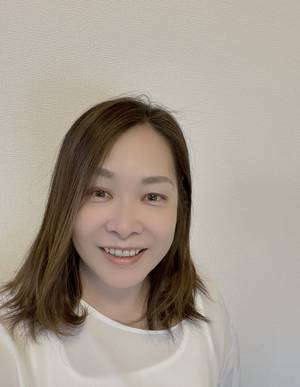
Kenichi Uchikura
Founder & CEO, Pacific Software Publishing, Inc. (PSPINC)
Bellevue, Washington

Kenichi Uchikura is the founder and CEO of Pacific Software Publishing, Inc. (PSPINC), a technology company based in the Seattle area. After graduating from Azusa Pacific University in 1983, he began his professional career in Japan before being assigned to establish his employer’s Seattle subsidiary. That international business experience laid the foundation for his entrepreneurial journey.

In 1987, Uchikura founded PSPINC, building the company into a long-standing provider of software development, web hosting, business communications, and SaaS solutions serving clients in both the United States and Japan. Originally known for Japanese software localization and cross-cultural technology services, PSPINC evolved alongside the growth of the Internet into a provider of digital infrastructure, custom web applications, and business communication platforms.

For nearly four decades, Uchikura has focused on helping organizations leverage technology to improve communication, strengthen customer relationships, and expand business opportunities. His work reflects a commitment to innovation, practical problem-solving, and fostering business connections between Japan and the United States.

🌐 https://pspinc.compspinc.com

Do You Know What “円” Is?

thread
Do You Know What “円” Is?
 
If you have studied Japanese or visited Japan, you probably know that 円 (en) means the Japanese currency, known in English as the yen.
 
But did you know that the historic Bank of Japan headquarters in Tokyo is shaped like the character “円” when viewed from above?
 
The Bank of Japan building, completed in 1896 and designed by architect Tatsuno Kingo, is one of Japan's most important financial landmarks. At street level, most people notice its impressive stone architecture and distinctive green copper roof. However, from the air, the layout of the main structure forms a shape that closely resembles the kanji 円.
 
Whether this was an intentional design choice or simply a fortunate coincidence is often debated. Regardless, it has become a fascinating piece of trivia connecting Japan's central bank with the very symbol of its currency.
 
The character 円 itself originally meant "circle" or "round shape," which is why it was adopted to represent money. The English word "yen" is simply the Romanized spelling of the Japanese pronunciation of 円.
 
So next time someone mentions the Japanese yen, you can share an interesting fact:
 
Japan's central bank is not only responsible for issuing the yen—it is housed in a building that looks like the character 円 itself.
 
Sometimes architecture and symbolism come together in surprising ways.
 
 
For Service and Iqnury : Call 1-800-232-3989 or 425-957-0808

Pacific Software Publishing, Inc.
Kenichi Uchikura
President / CEO
Pacific Software Publishing, Inc.
ken.uchikura@pspinc.com
Twitter | Facebook | Linked In

__..-・**・-..__..-・**・-..__..-・**・-..__..-・**・-..__

ABOUT PSPINC

PSPINC (Pacific Software Publishing, Inc.), based in Bellevue, Washington founded in 1987, has provided web hosting, email hosting, and internet solutions since 1997. The company operates data centers in the United States and Japan and supports businesses worldwide with reliable technology and multilingual service.

For more information or to discuss your needs, please call (800) 232-3939 or (425) 957-0808, or email Info@PSPINC.com

__..-・**・-..__..-・**・-..__..-・**・-..__..-・**・-..__

#Business #CrossCultural #Entrepreneurship #History #Innovation #Japan #JapanInsights #JapaneseCulture #Kaizen #Leadership #Management #Networking #PSPINC #Seattle #Technology #USJapan

People Who Wowed This Post

Tankman

thread
Tankman
Tank Man: One Man, Four Tanks, and a Lasting Symbol

Every year on June 4, the world remembers the events surrounding the 1989 Tiananmen Square protests in Beijing. While many images emerged from those days, one photograph has become a lasting symbol of courage and individual conviction: the image of the man now known simply as Tank Man.
 
On June 5, 1989, the day after the military moved into Beijing, a lone man carrying shopping bags stepped into the path of a column of tanks. As the tanks attempted to move around him, he repeatedly blocked their way. For a brief moment, one unarmed individual stood face to face with one of the most powerful instruments of the state.
 
To this day, the identity and fate of Tank Man remain unknown. Yet his image has become recognized around the world as a symbol of peaceful resistance and the power of individual conscience.
 
What makes the photograph so powerful is its simplicity. There are no speeches, no slogans, and no weapons. Just a single person making a decision to stand his ground.
 
History often remembers generals, politicians, and governments. Sometimes, however, history is defined by an ordinary person who chooses not to move.
 
More than three decades later, Tank Man continues to remind us that courage is not measured by power or position. Sometimes courage is simply the willingness to stand alone for what you believe is right.
 
 
For Service and Iqnury : Call 1-800-232-3989 or 425-957-0808

Pacific Software Publishing, Inc.
Kenichi Uchikura
President / CEO
Pacific Software Publishing, Inc.
ken.uchikura@pspinc.com
Twitter | Facebook | Linked In

__..-・**・-..__..-・**・-..__..-・**・-..__..-・**・-..__

ABOUT PSPINC

PSPINC (Pacific Software Publishing, Inc.), based in Bellevue, Washington founded in 1987, has provided web hosting, email hosting, and internet solutions since 1997. The company operates data centers in the United States and Japan and supports businesses worldwide with reliable technology and multilingual service.

For more information or to discuss your needs, please call (800) 232-3939 or (425) 957-0808, or email Info@PSPINC.com

__..-・**・-..__..-・**・-..__..-・**・-..__..-・**・-..__

#Business #CrossCultural #Entrepreneurship #History #Innovation #Japan #JapanInsights #JapaneseCulture #Kaizen #Leadership #Management #Networking #PSPINC #Seattle #Technology #USJapan

People Who Wowed This Post

明日があるさ Ashita Ga Aru Sa

thread
明日があるさ Ashita Ga Aru Sa
 
When people outside Japan hear the name Kyu Sakamoto, they usually think of "Sukiyaki." The song, originally titled Ue o Muite Arukō, became an international hit and remains one of the few Japanese-language songs to reach the top of the American music charts.
 
But in Japan, Kyu Sakamoto is also remembered for another song: "Ashita Ga Aru Sa" — which translates to "There Is Always Tomorrow."
 
The song tells the story of a shy young man who keeps trying to gather the courage to talk to a girl he likes. He follows her from a distance, thinks about calling her on the phone, and even rehearses what he wants to say. Yet each time, he loses his nerve and tells himself, "There is always tomorrow."
 
On the surface, it is a lighthearted love song. However, the phrase "Ashita Ga Aru Sa" became much more than that. For many Japanese people, it came to represent optimism, patience, and hope. No matter what happens today, tomorrow will come, bringing another opportunity.
 
I have always liked that message.
 
Life does not always go according to plan. Businesses have setbacks. Health challenges appear. Relationships sometimes become difficult. Yet one thing remains true: tomorrow comes. With it comes another chance to learn, improve, and move forward.
 
That simple message is probably why Ashita Ga Aru Sa is still remembered and loved more than sixty years after Kyu Sakamoto first sang it.
 
Sometimes a person does not need a complicated philosophy. Sometimes it is enough to remember three simple words:
 
Ashita ga aru.
 
There is always tomorrow.
 
 
For Service and Iqnury : Call 1-800-232-3989 or 425-957-0808

Pacific Software Publishing, Inc.
Kenichi Uchikura
President / CEO
Pacific Software Publishing, Inc.
ken.uchikura@pspinc.com
Twitter | Facebook | Linked In

__..-・**・-..__..-・**・-..__..-・**・-..__..-・**・-..__

ABOUT PSPINC

PSPINC (Pacific Software Publishing, Inc.), based in Bellevue, Washington founded in 1987, has provided web hosting, email hosting, and internet solutions since 1997. The company operates data centers in the United States and Japan and supports businesses worldwide with reliable technology and multilingual service.

For more information or to discuss your needs, please call (800) 232-3939 or (425) 957-0808, or email Info@PSPINC.com

__..-・**・-..__..-・**・-..__..-・**・-..__..-・**・-..__

#Business #CrossCultural #Entrepreneurship #History #Innovation #Japan #JapanInsights #JapaneseCulture #Kaizen #Leadership #Management #Networking #PSPINC #Seattle #Technology #USJapan

People Who Wowed This Post

Another interesting U.S.–Japan connection is Miss Veedol.

thread
Another interes...
Another interesting U.S.–Japan connection is Miss Veedol.
 
Many people today do not recognize the name Veedol, but it was a famous American motor oil brand created by the Tide Water Oil Company in 1913. Veedol became well known after Henry Ford selected it for the Model T, America's first mass-produced automobile.
 
The Japan connection came in 1931.
 
A Bellanca aircraft named Miss Veedol successfully completed the first non-stop flight from Japan to the mainland United States. Pilots Clyde Pangborn and Hugh Herndon Jr. flew from Sabishiro Beach in Misawa, Aomori Prefecture, to Wenatchee, Washington, covering more than 5,000 miles across the Pacific Ocean without stopping. The aircraft was sponsored by the Veedol oil company and carried the company's name.
 
This flight was one of the most significant aviation achievements of its era and helped demonstrate that direct trans-Pacific air travel was possible. It also created a lasting connection between Japan and Washington State long before regular commercial flights crossed the Pacific.
 
As a Washington resident, I find it fascinating that one of the earliest direct links between Japan and Washington involved a small airplane named after an American motor oil brand. Today, Wenatchee still remembers the arrival of Miss Veedol, while Misawa in Japan commemorates the departure point of this historic flight.
 
A small motor oil brand ended up becoming part of aviation history and a unique chapter in U.S.–Japan relations.


For Service and Iqnury : Call 1-800-232-3989 or 425-957-0808

Pacific Software Publishing, Inc.
Kenichi Uchikura
President / CEO
Pacific Software Publishing, Inc.
ken.uchikura@pspinc.com
Twitter | Facebook | Linked In

__..-・**・-..__..-・**・-..__..-・**・-..__..-・**・-..__

ABOUT PSPINC

PSPINC (Pacific Software Publishing, Inc.), based in Bellevue, Washington founded in 1987, has provided web hosting, email hosting, and internet solutions since 1997. The company operates data centers in the United States and Japan and supports businesses worldwide with reliable technology and multilingual service.

For more information or to discuss your needs, please call (800) 232-3939 or (425) 957-0808, or email Info@PSPINC.com

__..-・**・-..__..-・**・-..__..-・**・-..__..-・**・-..__

#Business #CrossCultural #Entrepreneurship #History #Innovation #Japan #JapanInsights #JapaneseCulture #Kaizen #Leadership #Management #Networking #PSPINC #Seattle #Technology #USJapan

People Who Wowed This Post

Where Have All the Diesel Passenger Cars Gone?

thread
Where Have All the Diesel Pass...
Where Have All the Diesel Passenger Cars Gone?

If you look at the U.S. automobile market today, it is difficult to find a new diesel passenger car. Diesel engines are still common in pickup trucks, commercial vehicles, and heavy equipment, but for ordinary passenger cars they have almost disappeared.
 
Japan is a little different.
 
While diesel passenger cars are no longer mainstream in Japan, they have not vanished completely. Mazda continues to offer several diesel-powered vehicles, including the CX-5, CX-60, and CX-80. Toyota also offers diesel engines in some larger SUVs and commercial vehicles. As a result, it is still possible to buy a new diesel-powered passenger vehicle in Japan today.
 
The reason diesel has declined is not because diesel engines are inherently bad. Modern emissions regulations have made diesel engines more complex and expensive. At the same time, hybrid technology has become extremely popular, especially in Japan. Many drivers who once chose diesel for fuel economy now choose hybrids instead.
 
I have always appreciated diesel engines. Older Mercedes-Benz diesel cars were famous for their durability, fuel efficiency, and ability to travel hundreds of thousands of miles. I owned both E-Class and S-Class Mercedes diesels and still miss them today.
 
Diesel may no longer dominate the passenger car market, but in Japan it is still alive—just in a much smaller niche than before.
 
Sometimes I wonder if there is still a place for a simple, inexpensive diesel passenger car. Not a luxury vehicle, not a high-tech hybrid, but a dependable workhorse that delivers excellent fuel economy and can run for hundreds of thousands of miles. Judging by the continued popularity of diesel vehicles in commercial applications, I suspect there are still many drivers who would appreciate such a car if manufacturers chose to build one.
 
 
For Service and Iqnury : Call 1-800-232-3989 or 425-957-0808

Pacific Software Publishing, Inc.
Kenichi Uchikura
President / CEO
Pacific Software Publishing, Inc.
ken.uchikura@pspinc.com
Twitter | Facebook | Linked In

__..-・**・-..__..-・**・-..__..-・**・-..__..-・**・-..__

ABOUT PSPINC

PSPINC (Pacific Software Publishing, Inc.), based in Bellevue, Washington founded in 1987, has provided web hosting, email hosting, and internet solutions since 1997. The company operates data centers in the United States and Japan and supports businesses worldwide with reliable technology and multilingual service.

For more information or to discuss your needs, please call (800) 232-3939 or (425) 957-0808, or email Info@PSPINC.com

__..-・**・-..__..-・**・-..__..-・**・-..__..-・**・-..__

#Business #CrossCultural #Entrepreneurship #History #Innovation #Japan #JapanInsights #JapaneseCulture #Kaizen #Leadership #Management #Networking #PSPINC #Seattle #Technology #USJapan

People Who Wowed This Post

The Most Reliable Internal Combustion Engines

thread
The Most Reliable Internal Com...
The Most Reliable Internal Combustion Engines

When people discuss the most reliable internal combustion engines, three names consistently come to mind: Toyota, Honda, and Mercedes-Benz diesel.
 
Toyota has built a reputation for producing engines that routinely exceed 200,000 to 300,000 miles with proper maintenance. Legendary engines such as the 2JZ and UZ-series V8 helped establish Toyota as the benchmark for long-term reliability.
 
Honda is equally respected for building efficient and durable engines. Models like the Civic and Accord have earned loyal owners around the world because of their ability to deliver years of dependable service with relatively low maintenance costs.
 
Mercedes-Benz deserves special recognition for its older diesel engines. These engines were engineered for longevity, and many examples have reportedly surpassed one million miles. They may not have been the fastest cars on the road, but they were built to last.
 
Korean manufacturers such as Hyundai and Kia have improved significantly, while Chinese manufacturers continue to make rapid progress. However, neither has yet established the decades-long track record enjoyed by Toyota, Honda, and classic Mercedes diesels.
 
My opinion is shaped by experience. I owned a Lexus LS 430, currently drive a Toyota Crown, and have driven both Honda Civics and Accords. Yet I still miss my Mercedes-Benz diesel E-Class and S-Class. There was something special about their durability, character, and timeless engineering.
 
PS: Image Mrcedes Bens S300 Doesel ... the Tank
 
 
For Service and Iqnury : Call 1-800-232-3989 or 425-957-0808

Pacific Software Publishing, Inc.
Kenichi Uchikura
President / CEO
Pacific Software Publishing, Inc.
ken.uchikura@pspinc.com
Twitter | Facebook | Linked In

__..-・**・-..__..-・**・-..__..-・**・-..__..-・**・-..__

ABOUT PSPINC

PSPINC (Pacific Software Publishing, Inc.), based in Bellevue, Washington founded in 1987, has provided web hosting, email hosting, and internet solutions since 1997. The company operates data centers in the United States and Japan and supports businesses worldwide with reliable technology and multilingual service.

For more information or to discuss your needs, please call (800) 232-3939 or (425) 957-0808, or email Info@PSPINC.com

__..-・**・-..__..-・**・-..__..-・**・-..__..-・**・-..__

#Business #CrossCultural #Entrepreneurship #History #Innovation #Japan #JapanInsights #JapaneseCulture #Kaizen #Leadership #Management #Networking #PSPINC #Seattle #Technology #USJapan

People Who Wowed This Post

Ken Uchikura Newsletter Vol. 392 Don’t Wait Until Your Bank Account Hits Zero

thread
Ken Uchikura Newsletter Vol. 3... Ken Uchikura Newsletter Vol. 392 Thumbnail

Don’t Wait Until Your Bank Account Hits Zero

In the business world, the moment you realize you’re out of money shouldn’t be when the bank account actually hits zero. It sounds obvious, but you’d be surprised how many business owners only start to panic once the well has run dry. By that point, it’s often too late. You can’t instantly secure a loan when you're in a pinch, and even if you land a big new contract today, it takes time for that work to turn into physical cash.

I don’t consider myself an exceptional businessperson, nor am I an expert in accounting or finance. I’m not particularly skilled at analyzing financial statements or complicated reports. However, there are two things I have always paid close attention to while running a company.

The first is how much cash the company currently has in the bank. The second is how much money the company needs to run.

If you know these two things, you can calculate exactly how long your company can survive—even if your revenue drops to zero tomorrow. I’ve operated with this mindset since the day I founded my business.

Thankfully, I’ve been running my company for 38 years, and during that time, I’ve never relied on business debt. Of course, I’m not against debt as a concept; many successful leaders use borrowed capital to scale their businesses, and that’s a perfectly valid strategic choice.

However, I never felt confident enough to manage that kind of leverage effectively. Instead, I aimed for a debt-free model from the start. Even when sales increased, I tried not to increase fixed expenses immediately. I avoided spending money based on future sales that hadn’t materialized yet. I always try to leave some margin just to be safe.

Just like the Shinkansen (bullet train) doesn’t run at full speed all the time, a company doesn’t need to operate at 100% capacity with no room to spare. In fact, having some margin is what lets a business respond when unexpected situations arise.

I have always stayed aware of two things: cash on hand and monthly operating expenses.

In business, profit is important, but cash is what keeps the heart beating. Don’t wait until the money is gone to wake up to the reality of your situation. Be the leader who always knows exactly how many months your company has to live.

That has been the cornerstone of my philosophy for 38 years.


For Service and Iqnury : Call 1-800-232-3989 or 425-957-0808

Pacific Software Publishing, Inc.
Kenichi Uchikura
President / CEO
Pacific Software Publishing, Inc.
ken.uchikura@pspinc.com
Twitter | Facebook | Linked In

__..-・**・-..__..-・**・-..__..-・**・-..__..-・**・-..__

ABOUT PSPINC

PSPINC (Pacific Software Publishing, Inc.), based in Bellevue, Washington founded in 1987, has provided web hosting, email hosting, and internet solutions since 1997. The company operates data centers in the United States and Japan and supports businesses worldwide with reliable technology and multilingual service.

For more information or to discuss your needs, please call (800) 232-3939 or (425) 957-0808, or email Info@PSPINC.com

__..-・**・-..__..-・**・-..__..-・**・-..__..-・**・-..__

#Bellevue #Bloguru #BusinessPlanning #BusinessStrategy #CrossBorderBusiness #FounderLife #JapanBusiness #KenUchikura #KenichiUchikura #MarketingLeadership #PSPinc #PacificSoftwarePublishing #TechEntrepreneur #Tokyo #USBusiness #UchikuraCo #ViewOfJapan

People Who Wowed This Post

Matcha: Chinese Roots, Japanese Refinement

thread
Matcha: Chinese Roots, Japanes...
Matcha: Chinese Roots, Japanese Refinement
 
Many people associate matcha with Japan, and for good reason. Today, matcha is one of Japan's most recognizable cultural exports. However, the story of matcha actually begins in China.
 
During China's Song Dynasty (960–1279), tea was often prepared by steaming tea leaves, forming them into cakes, grinding them into powder, and whisking the powder with hot water. This method, known as diancha (点茶), is considered the ancestor of modern matcha preparation.
 
In the early 1200s, the Japanese Zen monk Eisai traveled to China and returned to Japan with tea seeds and knowledge of tea cultivation and preparation. He promoted tea not only as a beverage but also as an aid to meditation and good health. As a result, tea became closely connected with Zen Buddhism in Japan.
 
Over the following centuries, Japan transformed this imported practice into something uniquely its own. During the Muromachi and Azuchi-Momoyama periods, tea masters such as Murata Jukō, Takeno Jōō, and Sen no Rikyū developed what became the Japanese tea ceremony.
 
More importantly, they infused tea culture with the Japanese aesthetic principles of wabi and sabi—an appreciation for simplicity, imperfection, and quiet beauty. The focus shifted from merely drinking tea to creating a mindful experience centered on hospitality, respect, and reflection.
 
Interestingly, while powdered tea gradually disappeared from mainstream Chinese tea culture, Japan preserved and refined it. The result is the matcha culture we know today.
 
Even the word matcha reflects this history. The word 抹茶 is written using Chinese characters (kanji), but matcha is a Japanese word and pronunciation. A Chinese speaker would recognize the characters and understand their meaning, but would pronounce them as mǒchá, not matcha. The word Matcha used around the world today comes directly from the Japanese pronunciation, much like sushi, tempura, and karate.
 
So, is matcha Chinese or Japanese?
 
The roots are Chinese, but the culture, ceremony, traditions, and even the internationally recognized word Matcha were largely developed, refined, and preserved in Japan. Sometimes the origin of an idea and its modern form are two different stories—and matcha is a perfect example.
 
 
For Service and Iqnury : Call 1-800-232-3989 or 425-957-0808

Pacific Software Publishing, Inc.
Kenichi Uchikura
President / CEO
Pacific Software Publishing, Inc.
ken.uchikura@pspinc.com
Twitter | Facebook | Linked In

__..-・**・-..__..-・**・-..__..-・**・-..__..-・**・-..__

ABOUT PSPINC

PSPINC (Pacific Software Publishing, Inc.), based in Bellevue, Washington founded in 1987, has provided web hosting, email hosting, and internet solutions since 1997. The company operates data centers in the United States and Japan and supports businesses worldwide with reliable technology and multilingual service.

For more information or to discuss your needs, please call (800) 232-3939 or (425) 957-0808, or email Info@PSPINC.com

__..-・**・-..__..-・**・-..__..-・**・-..__..-・**・-..__

#Business #CrossCultural #Entrepreneurship #History #Innovation #Japan #JapanInsights #JapaneseCulture #Kaizen #Leadership #Management #Networking #PSPINC #Seattle #Technology #USJapan

People Who Wowed This Post

Tokyo's Historic Grand Hotels

thread
Tokyo's Historic Grand Hotels
 
When people think of Japan's most prestigious hotels, three names often come to mind: the Imperial Hotel, Hotel Okura Tokyo, and Hotel New Otani. These hotels have long been known as places where diplomats, government officials, business leaders, and visiting dignitaries stay when visiting Tokyo.
 
The Imperial Hotel, established in 1890, was originally built to accommodate foreign guests visiting Japan. It has hosted presidents, royalty, and celebrities for more than a century. Hotel Okura Tokyo, opened in 1962, became famous for combining traditional Japanese design with modern luxury, creating an atmosphere that many international visitors associate with Japanese hospitality. Hotel New Otani was built for the 1964 Tokyo Olympics and is well known for its beautiful Japanese garden and convenient location near government offices and embassies.
 
Of course, Tokyo today has many luxury hotels. International brands such as Hilton, Marriott, Ritz-Carlton, and InterContinental operate outstanding properties throughout the city. There are also ultra-luxury hotels such as Aman, Four Seasons, and Mandarin Oriental that may charge higher room rates than the traditional grand hotels.
 
However, when it comes to history, reputation, and their long-standing role in hosting diplomats and world leaders, the Imperial Hotel, Hotel Okura Tokyo, and Hotel New Otani remain among the most iconic hotels in Japan.
 
Thanks to the relatively weak Japanese yen in recent years, these world-class hotels may be more affordable for international visitors than they expect. For travelers looking to experience a piece of modern Japanese history, this may be one of the best times to enjoy some of Tokyo's finest hospitality.
 
P.S. The image shows the grand entrance of Hotel New Otani Tokyo, featuring a beautiful seasonal ikebana arrangement by Sogetsu, one of Japan's most renowned schools of flower arrangement.
 
 
For Service and Iqnury : Call 1-800-232-3989 or 425-957-0808

Pacific Software Publishing, Inc.
Kenichi Uchikura
President / CEO
Pacific Software Publishing, Inc.
ken.uchikura@pspinc.com
Twitter | Facebook | Linked In

__..-・**・-..__..-・**・-..__..-・**・-..__..-・**・-..__

ABOUT PSPINC

PSPINC (Pacific Software Publishing, Inc.), based in Bellevue, Washington founded in 1987, has provided web hosting, email hosting, and internet solutions since 1997. The company operates data centers in the United States and Japan and supports businesses worldwide with reliable technology and multilingual service.

For more information or to discuss your needs, please call (800) 232-3939 or (425) 957-0808, or email Info@PSPINC.com

__..-・**・-..__..-・**・-..__..-・**・-..__..-・**・-..__

#Business #CrossCultural #Entrepreneurship #History #Innovation #Japan #JapanInsights #JapaneseCulture #Kaizen #Leadership #Management #Networking #PSPINC #Seattle #Technology #USJapan

People Who Wowed This Post

Our Small but Highly Effective Backup Datacenter

thread
Our Small but Highly Effective... Our Small but Highly Effective...
Our Small but Highly Effective Backup Datacenter
 
These photos show PSPINC's backup datacenter. While it may be smaller than our primary facility, it serves a critical role in protecting our customers and services.
 
The idea behind this datacenter comes from lessons learned through major disasters in Japan. Events such as the 1995 Great Hanshin Earthquake, the 2011 Great East Japan Earthquake and tsunami, and numerous typhoons demonstrated how quickly even the most advanced infrastructure can be disrupted. Businesses that depended on a single location often found themselves unable to continue operations when power, communications, or facilities became unavailable.
 
Those events reinforced an important principle: never depend on a single point of failure.
 
At PSPINC, we have applied that lesson to our own infrastructure. Our backup datacenter is fully managed and monitored 24 hours a day, 7 days a week. If anything were to happen to our primary datacenter, this facility is designed to take over most operations and continue providing services with minimal disruption.
 
A backup datacenter is more than a collection of servers. Systems must be maintained, monitored, synchronized, and tested to ensure they are ready when needed. Storage, networking, security, and recovery procedures all work together to provide business continuity.
 
The purpose of a backup datacenter is not to impress visitors with its size. Its purpose is to be ready when the unexpected happens. Most days it quietly operates in the background, but during an emergency it becomes one of the most important parts of our infrastructure.
 
We hope we never need to rely on it. However, the lessons learned from Japan's disasters have taught us that preparation, redundancy, and resilience are essential. That is why PSPINC continues to invest in infrastructure that keeps our customers online and protected.
 
 
For Service and Iqnury : Call 1-800-232-3989 or 425-957-0808

Pacific Software Publishing, Inc.
Kenichi Uchikura
President / CEO
Pacific Software Publishing, Inc.
ken.uchikura@pspinc.com
Twitter | Facebook | Linked In

__..-・**・-..__..-・**・-..__..-・**・-..__..-・**・-..__

ABOUT PSPINC

PSPINC (Pacific Software Publishing, Inc.), based in Bellevue, Washington founded in 1987, has provided web hosting, email hosting, and internet solutions since 1997. The company operates data centers in the United States and Japan and supports businesses worldwide with reliable technology and multilingual service.

For more information or to discuss your needs, please call (800) 232-3939 or (425) 957-0808, or email Info@PSPINC.com

__..-・**・-..__..-・**・-..__..-・**・-..__..-・**・-..__

#Business #CrossCultural #Entrepreneurship #History #Innovation #Japan #JapanInsights #JapaneseCulture #Kaizen #Leadership #Management #Networking #PSPINC #Seattle #Technology #USJapan

People Who Wowed This Post

  • If you are a bloguru member, please login.
    Login
  • If you are not a bloguru member, you may request a free account here:
    Request Account
Happy
Sad
Surprise