Search Bloguru posts

About PSPINC and Japan

https://en.bloguru.com/ken

freespace


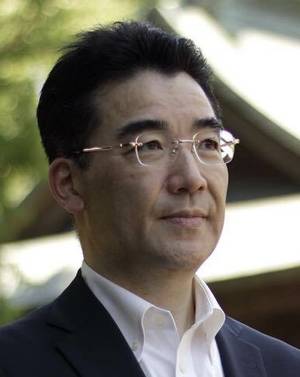
Kenichi Uchikura
Founder & CEO, Pacific Software Publishing, Inc. (PSPINC)
Bellevue, Washington

Kenichi Uchikura is the founder and CEO of Pacific Software Publishing, Inc. (PSPINC), a technology company based in the Seattle area. After graduating from Azusa Pacific University in 1983, he began his professional career in Japan before being assigned to establish his employer’s Seattle subsidiary. That international business experience laid the foundation for his entrepreneurial journey.

In 1987, Uchikura founded PSPINC, building the company into a long-standing provider of software development, web hosting, business communications, and SaaS solutions serving clients in both the United States and Japan. Originally known for Japanese software localization and cross-cultural technology services, PSPINC evolved alongside the growth of the Internet into a provider of digital infrastructure, custom web applications, and business communication platforms.

For nearly four decades, Uchikura has focused on helping organizations leverage technology to improve communication, strengthen customer relationships, and expand business opportunities. His work reflects a commitment to innovation, practical problem-solving, and fostering business connections between Japan and the United States.

🌐 https://pspinc.compspinc.com

Tokyo's Historic Grand Hotels

thread
Tokyo's Historic Grand Hotels
 
When people think of Japan's most prestigious hotels, three names often come to mind: the Imperial Hotel, Hotel Okura Tokyo, and Hotel New Otani. These hotels have long been known as places where diplomats, government officials, business leaders, and visiting dignitaries stay when visiting Tokyo.
 
The Imperial Hotel, established in 1890, was originally built to accommodate foreign guests visiting Japan. It has hosted presidents, royalty, and celebrities for more than a century. Hotel Okura Tokyo, opened in 1962, became famous for combining traditional Japanese design with modern luxury, creating an atmosphere that many international visitors associate with Japanese hospitality. Hotel New Otani was built for the 1964 Tokyo Olympics and is well known for its beautiful Japanese garden and convenient location near government offices and embassies.
 
Of course, Tokyo today has many luxury hotels. International brands such as Hilton, Marriott, Ritz-Carlton, and InterContinental operate outstanding properties throughout the city. There are also ultra-luxury hotels such as Aman, Four Seasons, and Mandarin Oriental that may charge higher room rates than the traditional grand hotels.
 
However, when it comes to history, reputation, and their long-standing role in hosting diplomats and world leaders, the Imperial Hotel, Hotel Okura Tokyo, and Hotel New Otani remain among the most iconic hotels in Japan.
 
Thanks to the relatively weak Japanese yen in recent years, these world-class hotels may be more affordable for international visitors than they expect. For travelers looking to experience a piece of modern Japanese history, this may be one of the best times to enjoy some of Tokyo's finest hospitality.
 
P.S. The image shows the grand entrance of Hotel New Otani Tokyo, featuring a beautiful seasonal ikebana arrangement by Sogetsu, one of Japan's most renowned schools of flower arrangement.
 
 
For Service and Iqnury : Call 1-800-232-3989 or 425-957-0808

Pacific Software Publishing, Inc.
Kenichi Uchikura
President / CEO
Pacific Software Publishing, Inc.
ken.uchikura@pspinc.com
Twitter | Facebook | Linked In

__..-・**・-..__..-・**・-..__..-・**・-..__..-・**・-..__

ABOUT PSPINC

PSPINC (Pacific Software Publishing, Inc.), based in Bellevue, Washington founded in 1987, has provided web hosting, email hosting, and internet solutions since 1997. The company operates data centers in the United States and Japan and supports businesses worldwide with reliable technology and multilingual service.

For more information or to discuss your needs, please call (800) 232-3939 or (425) 957-0808, or email Info@PSPINC.com

__..-・**・-..__..-・**・-..__..-・**・-..__..-・**・-..__

#Business #CrossCultural #Entrepreneurship #History #Innovation #Japan #JapanInsights #JapaneseCulture #Kaizen #Leadership #Management #Networking #PSPINC #Seattle #Technology #USJapan

People Who Wowed This Post

Our Small but Highly Effective Backup Datacenter

thread
Our Small but Highly Effective... Our Small but Highly Effective...
Our Small but Highly Effective Backup Datacenter
 
These photos show PSPINC's backup datacenter. While it may be smaller than our primary facility, it serves a critical role in protecting our customers and services.
 
The idea behind this datacenter comes from lessons learned through major disasters in Japan. Events such as the 1995 Great Hanshin Earthquake, the 2011 Great East Japan Earthquake and tsunami, and numerous typhoons demonstrated how quickly even the most advanced infrastructure can be disrupted. Businesses that depended on a single location often found themselves unable to continue operations when power, communications, or facilities became unavailable.
 
Those events reinforced an important principle: never depend on a single point of failure.
 
At PSPINC, we have applied that lesson to our own infrastructure. Our backup datacenter is fully managed and monitored 24 hours a day, 7 days a week. If anything were to happen to our primary datacenter, this facility is designed to take over most operations and continue providing services with minimal disruption.
 
A backup datacenter is more than a collection of servers. Systems must be maintained, monitored, synchronized, and tested to ensure they are ready when needed. Storage, networking, security, and recovery procedures all work together to provide business continuity.
 
The purpose of a backup datacenter is not to impress visitors with its size. Its purpose is to be ready when the unexpected happens. Most days it quietly operates in the background, but during an emergency it becomes one of the most important parts of our infrastructure.
 
We hope we never need to rely on it. However, the lessons learned from Japan's disasters have taught us that preparation, redundancy, and resilience are essential. That is why PSPINC continues to invest in infrastructure that keeps our customers online and protected.
 
 
For Service and Iqnury : Call 1-800-232-3989 or 425-957-0808

Pacific Software Publishing, Inc.
Kenichi Uchikura
President / CEO
Pacific Software Publishing, Inc.
ken.uchikura@pspinc.com
Twitter | Facebook | Linked In

__..-・**・-..__..-・**・-..__..-・**・-..__..-・**・-..__

ABOUT PSPINC

PSPINC (Pacific Software Publishing, Inc.), based in Bellevue, Washington founded in 1987, has provided web hosting, email hosting, and internet solutions since 1997. The company operates data centers in the United States and Japan and supports businesses worldwide with reliable technology and multilingual service.

For more information or to discuss your needs, please call (800) 232-3939 or (425) 957-0808, or email Info@PSPINC.com

__..-・**・-..__..-・**・-..__..-・**・-..__..-・**・-..__

#Business #CrossCultural #Entrepreneurship #History #Innovation #Japan #JapanInsights #JapaneseCulture #Kaizen #Leadership #Management #Networking #PSPINC #Seattle #Technology #USJapan

People Who Wowed This Post

Did Japan Really Lose US$70 Billion Defending the Yen?

thread
Did Japan Really Lose US$70 Bi...
Did Japan Really Lose US$70 Billion Defending the Yen?
 
From time to time, headlines appear claiming that Japan spent more than US$70 billion trying to strengthen the yen and failed because the yen continued to weaken.
 
On the surface, that sounds like a huge loss.
 
But is it really?
 
Let's assume Japan acquired those U.S. dollars years ago when the exchange rate was around ¥120 per U.S. dollar. To accumulate US$70 billion, Japan would have spent approximately ¥8.4 trillion.
 
Now suppose Japan sells those same dollars at an exchange rate of ¥159 per U.S. dollar. The sale would generate approximately ¥11.1 trillion.
 
That is a difference of about ¥2.7 trillion.
 
In other words, while the intervention may not have permanently reversed the direction of the currency market, Japan would still realize a substantial gain in yen terms from the appreciation of its dollar holdings.
 
This highlights an important lesson: whether something is considered a success or failure often depends on which number you are looking at.
 
If the goal was to push the yen back to a much stronger level and keep it there, critics may argue the intervention failed. But if you look at the value of the foreign currency reserves that were sold, the transaction itself may have produced a significant profit.
 
Markets are complex, and headlines are often written to attract attention. Sometimes it is worth taking a second look at the numbers behind the story before deciding whether an event was truly a success or a failure.
 
 
For Service and Iqnury : Call 1-800-232-3989 or 425-957-0808

Pacific Software Publishing, Inc.
Kenichi Uchikura
President / CEO
Pacific Software Publishing, Inc.
ken.uchikura@pspinc.com
Twitter | Facebook | Linked In

__..-・**・-..__..-・**・-..__..-・**・-..__..-・**・-..__

ABOUT PSPINC

PSPINC (Pacific Software Publishing, Inc.), based in Bellevue, Washington founded in 1987, has provided web hosting, email hosting, and internet solutions since 1997. The company operates data centers in the United States and Japan and supports businesses worldwide with reliable technology and multilingual service.

For more information or to discuss your needs, please call (800) 232-3939 or (425) 957-0808, or email Info@PSPINC.com

__..-・**・-..__..-・**・-..__..-・**・-..__..-・**・-..__

#Business #CrossCultural #Entrepreneurship #History #Innovation #Japan #JapanInsights #JapaneseCulture #Kaizen #Leadership #Management #Networking #PSPINC #Seattle #Technology #USJapan

People Who Wowed This Post

Japan's Challenge Is Not Population — It's Age

thread
Japan's Challenge Is Not Popul...
Japan's Challenge Is Not Population — It's Age
 
When people talk about Japan's demographic problems, they often focus on the country's declining population. While that is true, I believe the more important issue is not the number of people, but their age.
 
In 1980, Japan's population was approximately 117 million. Today, in 2026, it is about 121 million. At first glance, that does not seem like a dramatic difference. The population is actually slightly larger today than it was in 1980.
 
The real change is the age of the population.
 
In 1980, the median age in Japan was about 33 years old. Today, it is about 50 years old. In other words, the typical Japanese person is now roughly 17 years older than the typical Japanese person was in 1980.
 
Think about what that means.
 
A society with a median age of 33 is full of young workers, young families, and children. These people are buying homes, raising families, starting businesses, and driving economic growth.
 
A society with a median age of 50 is very different. More people are retired or approaching retirement. There are fewer children, fewer young workers entering the workforce, and a greater demand for healthcare and social services.
 
This is why simply discussing population numbers can be misleading. If Japan still had 121 million people but the median age remained around 33, the country would face very different challenges than it does today.
 
The issue is not just how many people Japan has. The issue is the balance between generations.
 
Japan is becoming a nation where fewer working-age people must support a growing number of retirees. That creates pressure on pension systems, healthcare services, government finances, and the economy as a whole.
 
When discussing Japan's future, we should pay attention not only to population figures but also to age distribution. The country's demographic challenge is not merely a shrinking population. It is an aging one.
 
 
For Service and Iqnury : Call 1-800-232-3989 or 425-957-0808

Pacific Software Publishing, Inc.
Kenichi Uchikura
President / CEO
Pacific Software Publishing, Inc.
ken.uchikura@pspinc.com
Twitter | Facebook | Linked In

__..-・**・-..__..-・**・-..__..-・**・-..__..-・**・-..__

ABOUT PSPINC

PSPINC (Pacific Software Publishing, Inc.), based in Bellevue, Washington founded in 1987, has provided web hosting, email hosting, and internet solutions since 1997. The company operates data centers in the United States and Japan and supports businesses worldwide with reliable technology and multilingual service.

For more information or to discuss your needs, please call (800) 232-3939 or (425) 957-0808, or email Info@PSPINC.com

__..-・**・-..__..-・**・-..__..-・**・-..__..-・**・-..__

#Business #CrossCultural #Entrepreneurship #History #Innovation #Japan #JapanInsights #JapaneseCulture #Kaizen #Leadership #Management #Networking #PSPINC #Seattle #Technology #USJapan

People Who Wowed This Post

History Lives On

thread
Japan: A World Leader in Military Seaplanes
 
When it comes to military seaplanes still in active service, Japan is arguably the world leader. The aircraft behind this reputation is the ShinMaywa US-2, operated by the Japan Maritime Self-Defense Force for long-range search-and-rescue missions.
 
The US-2 is built by ShinMaywa Industries, a company whose roots trace back to Kawanishi Aircraft Company, the manufacturer of the legendary H8K flying boat used during World War II.
 
The US-2 evolved from Japan's earlier PS-1 and US-1 aircraft and remains one of the few military flying boats still in production today. One of its most impressive capabilities is its ability to take off and land in rough seas, handling waves up to 3 meters (10 feet) high.
 
Its main competitors are China's AVIC AG600 Kunlong and Russia's Beriev Be-200. The AG600 is larger and can carry more passengers and cargo, while the Be-200 is a jet-powered amphibious aircraft. However, many aviation experts consider the US-2 to be the most capable aircraft for open-ocean search-and-rescue operations.
 
The biggest challenge for the US-2 is its cost. Depending on the configuration, each aircraft can cost more than ¥10 billion (approximately $70–90 million USD). Another challenge is that few countries have a need for large military flying boats, as most rely on helicopters, maritime patrol aircraft, or conventional transports.
 
 
For Service and Iqnury : Call 1-800-232-3989 or 425-957-0808

Pacific Software Publishing, Inc.
Kenichi Uchikura
President / CEO
Pacific Software Publishing, Inc.
ken.uchikura@pspinc.com
Twitter | Facebook | Linked In

__..-・**・-..__..-・**・-..__..-・**・-..__..-・**・-..__

ABOUT PSPINC

PSPINC (Pacific Software Publishing, Inc.), based in Bellevue, Washington founded in 1987, has provided web hosting, email hosting, and internet solutions since 1997. The company operates data centers in the United States and Japan and supports businesses worldwide with reliable technology and multilingual service.

For more information or to discuss your needs, please call (800) 232-3939 or (425) 957-0808, or email Info@PSPINC.com

__..-・**・-..__..-・**・-..__..-・**・-..__..-・**・-..__

#Bellevue #Bloguru #BusinessPlanning #BusinessStrategy #CrossBorderBusiness #FounderLife #JapanBusiness #KenUchikura #KenichiUchikura #MarketingLeadership #PSPinc #PacificSoftwarePublishing #TechEntrepreneur #Tokyo #USBusiness #UchikuraCo #ViewOfJapan

People Who Wowed This Post

Visit Japan Web

thread
Visit Japan Web
Visit Japan Web
 
When you are planning a trip to Japan, I recommend using Visit Japan Web before you arrive.
 
This official Japanese government service lets travelers register immigration, customs, and other arrival information online in advance. After registration, you can receive a QR code that can be shown at the airport, helping make the arrival process smoother and faster.
 
Japan’s airports can be very busy, especially during peak travel seasons. Having your information prepared ahead of time can save you time and reduce stress after a long flight.
 
It is not difficult to use, and it is worth doing before your trip.
 
I will be traveling to Japan myself and arriving on June 9, 2026. As I prepare for my trip, I have already completed my registration through Visit Japan Web. It only takes a short time to set up, and it can make the arrival process much more efficient.
 
If you are planning a trip to Japan, I encourage you to take a few minutes and register before you leave.


For Service and Iqnury : Call 1-800-232-3989 or 425-957-0808

Pacific Software Publishing, Inc.
Kenichi Uchikura
President / CEO
Pacific Software Publishing, Inc.
ken.uchikura@pspinc.com
Twitter | Facebook | Linked In

__..-・**・-..__..-・**・-..__..-・**・-..__..-・**・-..__

ABOUT PSPINC

PSPINC (Pacific Software Publishing, Inc.), based in Bellevue, Washington founded in 1987, has provided web hosting, email hosting, and internet solutions since 1997. The company operates data centers in the United States and Japan and supports businesses worldwide with reliable technology and multilingual service.

For more information or to discuss your needs, please call (800) 232-3939 or (425) 957-0808, or email Info@PSPINC.com

__..-・**・-..__..-・**・-..__..-・**・-..__..-・**・-..__

#Bellevue #Bloguru #BusinessPlanning #BusinessStrategy #CrossBorderBusiness #FounderLife #JapanBusiness #KenUchikura #KenichiUchikura #MarketingLeadership #PSPinc #PacificSoftwarePublishing #TechEntrepreneur #Tokyo #USBusiness #UchikuraCo #ViewOfJapan

People Who Wowed This Post

"Tatsu Tori Ato wo Nigosazu" (立つ鳥跡を濁さず)

thread
"Tatsu Tori Ato...
"Tatsu Tori Ato wo Nigosazu" (立つ鳥跡を濁さず)
 
A direct translation would be, "A bird does not muddy the water when it leaves." In practice, it means that when you leave a place, you should leave it in good condition and avoid creating problems for those who come after you.
 
I believe this simple idea is one of the values that quietly shapes Japanese society.
 
You may have seen news stories showing Japanese soccer fans cleaning the stadium after international matches. They are not asked to do it, and nobody pays them. They simply feel that if they used the space, they should leave it clean for the next people. To many Japanese, this is not an extraordinary act—it is simply the right thing to do.
 
Another example can be seen in Major League Baseball. Shohei Ohtani is often seen chewing sunflower seeds in the dugout, but instead of spitting the shells onto the floor, he spits them into a paper cup. It is a small detail that many people might overlook, yet it reflects a mindset of not leaving unnecessary work for others.
 
The same attitude can often be seen when Japanese people check out of a hotel. Many will fold their used towels, place their trash in the wastebasket, organize their belongings, and even straighten the bed before leaving. They know that housekeeping staff will still need to clean the room, but tidying up is a way of showing appreciation and respect.
 
Visitors to Japan are often surprised by another fact: there are relatively few public trash cans. Despite this, Japanese cities remain remarkably clean. Many people simply carry their trash with them until they find an appropriate place to dispose of it. The responsibility for the waste remains with the person who created it.
 
Of course, no country is perfect, and not every Japanese person follows these values all the time. However, the idea of leaving a place as good as—or better than—you found it remains deeply rooted in Japanese culture.
 
"Tatsu Tori Ato wo Nigosazu" is more than a proverb. It is a quiet expression of responsibility, respect, and consideration for others. It helps explain many small behaviors that visitors notice in Japan, and perhaps it is one of the reasons why Japanese culture continues to earn admiration around the world.
 
 
For Service and Iqnury : Call 1-800-232-3989 or 425-957-0808

Pacific Software Publishing, Inc.
Kenichi Uchikura
President / CEO
Pacific Software Publishing, Inc.
ken.uchikura@pspinc.com
Twitter | Facebook | Linked In

__..-・**・-..__..-・**・-..__..-・**・-..__..-・**・-..__

ABOUT PSPINC

PSPINC (Pacific Software Publishing, Inc.), based in Bellevue, Washington founded in 1987, has provided web hosting, email hosting, and internet solutions since 1997. The company operates data centers in the United States and Japan and supports businesses worldwide with reliable technology and multilingual service.

For more information or to discuss your needs, please call (800) 232-3939 or (425) 957-0808, or email Info@PSPINC.com

__..-・**・-..__..-・**・-..__..-・**・-..__..-・**・-..__

#Bellevue #Bloguru #BusinessPlanning #BusinessStrategy #CrossBorderBusiness #FounderLife #JapanBusiness #KenUchikura #KenichiUchikura #MarketingLeadership #PSPinc #PacificSoftwarePublishing #TechEntrepreneur #Tokyo #USBusiness #UchikuraCo #ViewOfJapan

People Who Wowed This Post

Finger-Pointing Safety Checks

thread
Finger-Pointing Safety Checks
Finger-Pointing Safety Checks: An Everyday Japanese Practice That Improved New York's Subway Safety
 
For Japanese people, it is a very familiar sight.
 
Train operators and conductors point at signals, gauges, and indicators while verbally confirming what they see. This practice is called "Shisa Kanko" (Pointing and Calling), a safety method developed in Japan's railway industry more than a century ago.
 
The idea is simple. Human beings can overlook things or make assumptions, even when looking directly at them. By physically pointing at an object and verbally confirming its status, workers engage their eyes, ears, voice, and body at the same time. This significantly reduces the likelihood of human error.
 
In Japan, the practice is so common that many people hardly notice it anymore. However, safety experts around the world have studied its effectiveness.
 
One of the best-known examples is the New York City Subway. Train operators point to a designated marker when their train stops at a station. This simple action confirms that the train has stopped in the correct position and helps prevent operational mistakes.
 
Studies have shown that pointing and calling can dramatically reduce human errors. As a result, the technique has been adopted not only in railways but also in factories, power plants, transportation systems, and other industries where safety is critical.
 
Today, we often hear about artificial intelligence, automation, and advanced technology. Yet one of the most effective safety innovations is surprisingly simple: point, look, and say it out loud.
 
It is a reminder that not all innovations require complex technology. Sometimes, a simple idea that improves human performance can have a lasting impact around the world. What seems ordinary in Japan may, in fact, be an innovation that helps make the world safer.
 
 
For Service and Iqnury : Call 1-800-232-3989 or 425-957-0808

Pacific Software Publishing, Inc.
Kenichi Uchikura
President / CEO
Pacific Software Publishing, Inc.
ken.uchikura@pspinc.com
Twitter | Facebook | Linked In

__..-・**・-..__..-・**・-..__..-・**・-..__..-・**・-..__

ABOUT PSPINC

PSPINC (Pacific Software Publishing, Inc.), based in Bellevue, Washington founded in 1987, has provided web hosting, email hosting, and internet solutions since 1997. The company operates data centers in the United States and Japan and supports businesses worldwide with reliable technology and multilingual service.

For more information or to discuss your needs, please call (800) 232-3939 or (425) 957-0808, or email Info@PSPINC.com

__..-・**・-..__..-・**・-..__..-・**・-..__..-・**・-..__

#Bellevue #Bloguru #BusinessPlanning #BusinessStrategy #CrossBorderBusiness #FounderLife #JapanBusiness #KenUchikura #KenichiUchikura #MarketingLeadership #PSPinc #PacificSoftwarePublishing #TechEntrepreneur #Tokyo #USBusiness #UchikuraCo #ViewOfJapan

People Who Wowed This Post

Japan’s Aesthetics of Subtraction "引き算の美学"

thread
Japan’s Aesthet...
Japan’s Aesthetics of Subtraction "引き算の美学" : How It Differs from the West and the Rest of Asia
 
Have you ever heard of the Japanese concept of “the aesthetics of subtraction”?
 
It is a philosophy deeply rooted in Japanese culture, design, and craftsmanship. Rather than asking, “What can we add?”, it asks, “What can we remove while preserving what truly matters?”
 
In the West, a similar idea is often expressed by the phrase “Less is More,” popularized by the German architect Ludwig Mies van der Rohe. The goal is often functional efficiency and rational design. You can see this influence in modern architecture, industrial design, and products such as those created by Apple.
 
Japan shares some of these principles, but the underlying philosophy is different.
 
In a traditional Japanese tea room, a Zen rock garden, calligraphy, or ikebana (flower arrangement), empty space is not considered unfinished. Instead, the space itself has value. What is left unsaid, unseen, or unfilled invites reflection and imagination. In Japanese culture, simplicity is not only about efficiency—it is also about creating a sense of calm, balance, and appreciation for subtle beauty.
 
Looking across Asia, many cultures have historically embraced grandeur and richness. Traditional Chinese palaces, for example, often emphasize scale, decoration, and symbolism. In modern Asia, consumers frequently value products that offer many features and functions.
 
Of course, there are exceptions everywhere. But in general, Western minimalism often focuses on practicality, many Asian markets favor abundance and capability, while Japanese design seeks to reveal the essence of something by removing what is unnecessary.
 
This principle extends beyond art and design into business.
 
Successful companies do not grow simply by adding more products, services, or features. Often, their greatest strength comes from identifying what truly creates value and having the courage to eliminate everything that does not.
 
The aesthetics of subtraction is not merely minimalism.
 
It is the ability to recognize what is essential.
 
That may be one of Japan’s most unique contributions to the world of design, craftsmanship, and even business thinking.
 
 
For Service and Iqnury : Call 1-800-232-3989 or 425-957-0808

Pacific Software Publishing, Inc.
Kenichi Uchikura
President / CEO
Pacific Software Publishing, Inc.
ken.uchikura@pspinc.com
Twitter | Facebook | Linked In

__..-・**・-..__..-・**・-..__..-・**・-..__..-・**・-..__

ABOUT PSPINC

PSPINC (Pacific Software Publishing, Inc.), based in Bellevue, Washington founded in 1987, has provided web hosting, email hosting, and internet solutions since 1997. The company operates data centers in the United States and Japan and supports businesses worldwide with reliable technology and multilingual service.

For more information or to discuss your needs, please call (800) 232-3939 or (425) 957-0808, or email Info@PSPINC.com

__..-・**・-..__..-・**・-..__..-・**・-..__..-・**・-..__

#Bellevue #Bloguru #BusinessPlanning #BusinessStrategy #CrossBorderBusiness #FounderLife #JapanBusiness #KenUchikura #KenichiUchikura #MarketingLeadership #PSPinc #PacificSoftwarePublishing #TechEntrepreneur #Tokyo #USBusiness #UchikuraCo #ViewOfJapan

People Who Wowed This Post

Owakon

thread
Owakon
Owakon
 
One word you often hear among younger Japanese people is "Owakon" (オワコン). It is a shortened form of "Owatta Content" (終わったコンテンツ), which literally means "finished content."
 
The term is commonly used to describe something that people believe has passed its peak, lost popularity, or no longer has a future. A declining TV show, an aging social media platform, a video game with fewer players, or even a business can be labeled as "Owakon."
 
Japanese people enjoy shortening words and phrases. Examples include Pasokon (Personal Computer), Rimokon (Remote Control), and Cospa (Cost Performance). "Owakon" follows the same pattern.
 
What makes this word interesting is that it often reflects perception rather than reality. Throughout history, many things have been called "Owakon." Email was considered outdated. Blogs were said to be dead. Desktop computers were supposedly being replaced by mobile devices.
 
Yet all of these still exist and continue to serve important purposes.
 
The same is true in business. Just because something is no longer the newest trend does not mean it has lost its value. Many successful companies operate in mature markets and continue to serve loyal customers for decades.
 
There is a difference between being out of fashion and being without value.
 
The next time you hear someone call something "Owakon," it may be worth asking: Is it really finished, or has it simply moved beyond the spotlight and found a sustainable place in the market?
 
 
For Service and Iqnury : Call 1-800-232-3989 or 425-957-0808

Pacific Software Publishing, Inc.
Kenichi Uchikura
President / CEO
Pacific Software Publishing, Inc.
ken.uchikura@pspinc.com
Twitter | Facebook | Linked In

__..-・**・-..__..-・**・-..__..-・**・-..__..-・**・-..__

ABOUT PSPINC

PSPINC (Pacific Software Publishing, Inc.), based in Bellevue, Washington founded in 1987, has provided web hosting, email hosting, and internet solutions since 1997. The company operates data centers in the United States and Japan and supports businesses worldwide with reliable technology and multilingual service.

For more information or to discuss your needs, please call (800) 232-3939 or (425) 957-0808, or email Info@PSPINC.com

__..-・**・-..__..-・**・-..__..-・**・-..__..-・**・-..__

#Bellevue #Bloguru #BusinessPlanning #BusinessStrategy #CrossBorderBusiness #FounderLife #JapanBusiness #KenUchikura #KenichiUchikura #MarketingLeadership #PSPinc #PacificSoftwarePublishing #TechEntrepreneur #Tokyo #USBusiness #UchikuraCo #ViewOfJapan

People Who Wowed This Post

  • If you are a bloguru member, please login.
    Login
  • If you are not a bloguru member, you may request a free account here:
    Request Account
Happy
Sad
Surprise